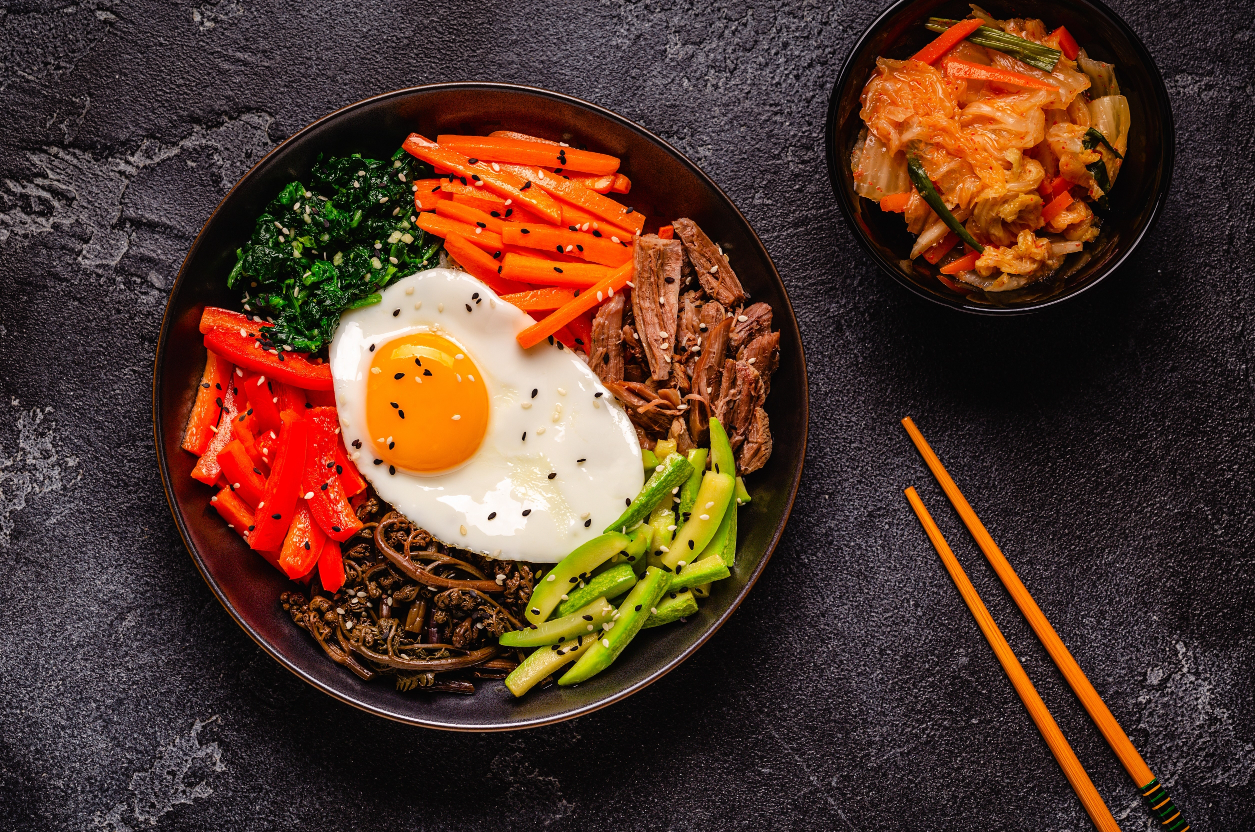

In this month’s blog we take a look at the history and healthy-eating credentials of the Korean classic that is…Bibimbap.


Bibimbap is deeply rooted in Korean history and culture and, like many famous dishes, has more than one origin story. There are several theories behind its origins and the dish has also, likely, evolved over time.
The term Bibimbap combines two words; ‘Bibim’ meaning ‘mixing ingredients together’ and ‘bap’ meaning ‘rice’. The dish involves a single bowl with a carefully curated mix of rice, vegetables (sautéed, seasoned or raw), meat (typically beef) and a fried egg – topped with a generous dollop of gochujang sauce (a classic Korean chilli sauce which combines sweetness, spiciness, and a hint of umami.)
One popular theory suggests the dish has royal origins dating back to the Joseon Dynasty (1392-1910). During this time it was typical for royal court meals to be served in a very refined way, focusing on balance, nutrition, and colour.
Another theory suggests that Bibimbap originated as a way to use up leftover ingredients. In the past, after a big meal, people would mix the remaining vegetables, rice, and meat into a single bowl – which could then be used as a flavourful, satisfying lunch. (A bit like how the British make Bubble & Squeak with roast dinner leftovers). This was a popular custom among the working classes who needed to make food go further.
Other sources suggest Bibimbap is connected to traditional Korean rituals, particularly New Year’s Day (Seollal) or other holidays. In these cases, people would mix various ingredients symbolizing balance and harmony. The dish would be prepared with a variety of ingredients, such as vegetables and meats, representing different elements of nature, to usher in health and well-being for the year ahead.
Bibimbap’s mix of ingredients is often seen as a symbol of balance and harmony, combining a variety of colours, textures and flavours. It’s a dish that reflects key Korean culinary principles, such as the harmony of yin and yang (balance of elements) and the five basic colours: green, red, yellow, white and black, which are believed to have significance for health and vitality.

One thing is for sure, over the years, Bibimbap has become a staple comfort food in Korean homes and restaurants around the world. In its modern form, it’s known for being a versatile dish that combines a variety of textures and flavours, from the crunch of vegetables to the richness of egg and gochujang sauce.
It reflects the adaptability of Korean cuisine, blending practicality, nutrition and culture – all in one bowl!
Bibimbap has recently attracted global attention through its effortless combination of a beautiful aesthetic with strong health credentials. Featuring a significant amount of raw or lightly cooked veggies, Bibimbap is packed full of fibre, vitamins and minerals, together with lean proteins and wholegrains – a great combination for a balanced and wholesome meal.
Vegetables
Bibimbap typically includes a variety of vegetables, such as spinach, courgette, carrots, mushrooms and bean sprouts. These provide, fibre, which is good for digestion, helping you feel full for longer, as well as essential vitamins and minerals (like vitamin A, vitamin C, folate and potassium). Antioxidant rich veggies, like spinach and mushrooms, can also help reduce inflammation and support overall health.
Protein
Bibimbap typically includes beef, egg or tofu as sources of protein.
Eggs are high in protein, healthy fats, and important vitamins like B12, vitamin D and choline.
Lean beef is an excellent source of high-quality protein, iron and zinc.
Meanwhile Tofu is a popular vegetarian option, providing plant-based protein, iron and calcium.
Rice
Traditionally, short-grain rice is used, which is sticky and easy to mix. While white sticky rice is a high glycemic index (GI) carbohydrate, it’s also an energy booster and, when combined with other fibre-rich ingredients, provides steady energy and blood sugar levels.
Healthy fats
The dish includes sesame oil, which provides monounsaturated fats, which are considered healthy fats. Sesame oil is also rich in antioxidants like sesamol and sesamin, which have anti-inflammatory properties.
Spicy gochujang sauce
The gochujang (Korean chilli paste) used in Bibimbap is made from blended red chillies. Spicy food may have a circulation boosting effect on the body, which promotes a healthy cardiovascular system and helps boost metabolism. It also adds flavour without the need for excessive amounts of salt or sugar. (although gochujang can be high in sodium, itself, so it is best to use in moderation).
Versatile
Bibimbap is highly versatile, which makes it easy to adjust for specific dietary needs. You can make it vegetarian, vegan, gluten free or even keto by substituting and switching out ingredients.
Tips for making it even healthier
Reduce sodium: Use low-sodium soy sauce for the beef or marinade, and control the amount of gochujang.
Use less rice: Rice is the main carb in Bibimbap, so consider using a smaller portion if you’re trying to reduce your carb intake or switch it out for brown rice for added fibre.
Lean protein: Opt for lean protein sources like grilled chicken, tofu, or even seafood for a lighter version of Bibimbap.
Overall, Bibimbap is a nutrient-dense dish that can be tailored to fit a healthy, balanced diet, offering a great combination of protein, vegetables, healthy fats and carbs!
Check out our recipe for quick and easy Bibimbap here